


Written by
Ishioma Appiah-Yeboah
The United Kingdom and Nigeria are taking their security partnership to a new level as both countries begin a fresh phase of cooperation aimed at tackling terrorism, cyber threats, organised crime and growing regional instability.
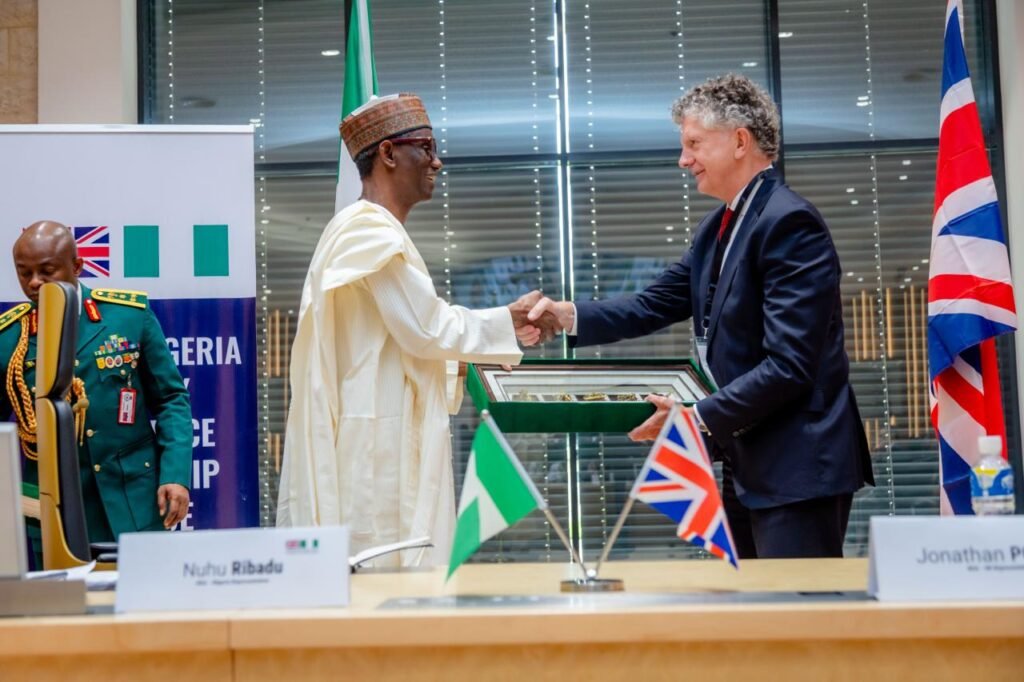
The Fourth UK–Nigeria Security and Defence Partnership (SDP4) Dialogue, holding in Abuja, signals a shift from discussions to action, with both sides seeking stronger coordination, intelligence sharing and practical solutions to emerging security challenges.
Nigeria’s National Security Adviser, Mallam Nuhu Ribadu, described the partnership as a key pillar of the relationship between both countries, built on trust, mutual respect and a shared commitment to peace and stability.
The United Kingdom’s National Security Adviser, Jonathan Powell, also described the partnership as a mature relationship focused on delivering real results rather than just agreements on paper.
Since its launch in 2022, the partnership has expanded beyond traditional defence cooperation to include counter-terrorism, cybersecurity, intelligence operations, maritime security, law enforcement and efforts to counter misinformation and foreign interference.
The timing of SDP4 is significant as West Africa faces increasing security pressures, including terrorism, arms trafficking, criminal networks, cybercrime and instability in the Sahel region.
Both countries agree that modern security threats cannot be solved through military action alone. They require cooperation across intelligence, technology, finance, diplomacy and community engagement.
Recent progress under the partnership includes improved intelligence coordination, stronger counter-terrorism operations, enhanced cyber defence and efforts to disrupt terrorist financing networks.
Nigeria’s security agencies have also strengthened cooperation with international partners to track criminal networks, investigate terrorism-related activities and improve crisis response.
A major focus of the partnership is the fight against the financing of terrorism and organised crime. Through financial intelligence cooperation, both countries are working to identify and block money channels that support insecurity.
Cybersecurity is another growing priority, with both sides recognising the increasing use of artificial intelligence, digital platforms and online networks by criminal groups and hostile actors.
The partnership is also placing greater emphasis on strategic communication, as misinformation and disinformation become tools used to create instability and weaken public trust, additionally strengthening public confidence, protecting democratic institutions and ensuring respect for human rights remain central to long-term security cooperation.
As SDP4 continues in Abuja, expectations are high that the talks will produce stronger frameworks for defence cooperation, cyber resilience and regional security.
For Nigeria and the UK, the message is clear: the future of security cooperation will be judged not by meetings held, but by safer communities, stronger institutions and measurable results.