

Written by
Ishioma Appiah-Yeboah
The Federal Government has unveiled a fresh strategy to transform Nigeria’s agriculture sector by expanding access to reliable electricity for productive activities, a move expected to reduce post-harvest losses, boost food production, strengthen agro-processing and create jobs across rural communities.
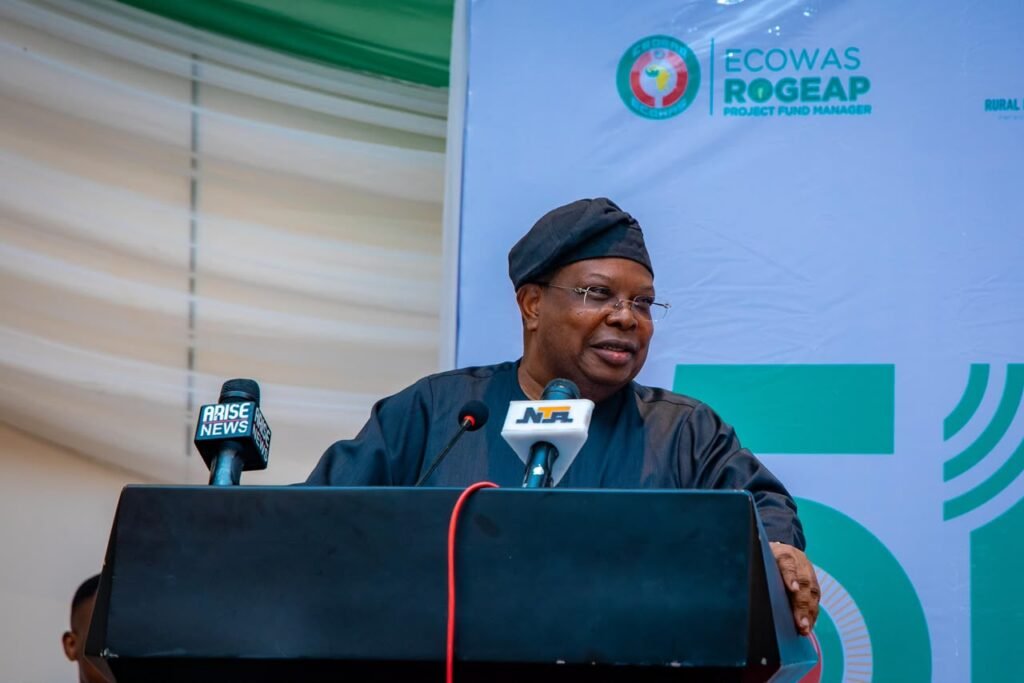
At the Stakeholders’ Engagement Workshop on Productive Use of Energy (PUE) in Abuja, the Minister of Power, Joseph Tegbe, said the country’s rural electrification agenda has evolved beyond connecting communities to the national grid, stressing that the focus is now on using electricity as a tool for economic development, enterprise growth and improved livelihoods.
According to the minister, access to reliable and affordable electricity must translate into tangible economic outcomes by enabling farmers to irrigate larger farmlands, processors to add value to agricultural produce, cold rooms to preserve perishable goods and rural entrepreneurs to establish businesses that can thrive on sustainable energy.
Tegbe explained that the Productive Use of Energy initiative brings together key sectors including power, agriculture, industrialisation, finance and rural development, making it a critical component of the Federal Government’s drive to diversify the economy and improve food security.
He noted that Nigeria continues to lose substantial value across the agricultural value chain because of poor access to energy, resulting in inadequate cold storage, limited processing capacity and dependence on expensive diesel-powered equipment.
Addressing these challenges, he said, would increase farmers’ incomes, reduce food waste, improve market access and make locally produced food more competitive.
The minister added that the initiative also presents strong investment opportunities for manufacturers of productive-use equipment, financial institutions seeking bankable green energy projects and private sector investors looking to expand renewable energy solutions in underserved communities.
He urged stakeholders to move beyond discussions and build partnerships capable of accelerating investments that will position Nigeria as Africa’s leading market for productive-use energy technologies.
Also speaking , Managing Director and Chief Executive Officer of the Rural Electrification Agency (REA), Abba Abubakar Aliyu, described the initiative as a long-term intervention aimed at strengthening the productive capacity of Nigeria’s rural economy rather than simply expanding electricity access.
He said smallholder farmers and Micro, Small and Medium Enterprises (MSMEs), which account for a significant share of Nigeria’s agricultural production and rural employment, remain at the centre of the programme.
Aliyu disclosed that the REA’s Energising Agriculture Programme has already developed a pipeline of more than 120 bankable projects, designed to provide reliable electricity to agricultural clusters and agro-processing facilities across the country.
He also highlighted ongoing investments under the Distributed Access through Renewable Energy Scale-up (DARES) programme, which has earmarked 250 million dollars for standalone solar systems, 100 million dollars for solar-as-a-business initiatives and 50 million dollars specifically for productive-use equipment that will help farmers and rural enterprises improve productivity.
On his part , the Minister of Agriculture and Food Security, represented at the workshop, reaffirmed his ministry’s commitment to aligning agricultural policies with the Productive Use of Energy agenda, noting that improved access to energy is essential for achieving national food security objectives and modernising agricultural production.
A representative of the ECOWAS Commission also pledged continued regional support, describing Nigeria’s initiative as part of a broader West African effort to deploy clean energy solutions that can strengthen agricultural productivity, improve rural livelihoods and stimulate inclusive economic growth.
Beyond expanding electricity access, the workshop underscored the growing recognition that energy is a critical enabler of agricultural transformation. Reliable power can significantly reduce post-harvest losses, lower production costs, increase value addition through local processing, improve food preservation and enhance the competitiveness of Nigeria’s agricultural exports.
Stakeholders agreed that unlocking these opportunities will require stronger collaboration among government institutions, development partners, financial institutions, technology providers and the private sector to mobilise investment, establish financing frameworks and accelerate the deployment of productive-use energy technologies nationwide.
The workshop is the first in a series of engagements expected to focus on financing mechanisms, technology standards and implementation strategies, laying the foundation for a nationwide rollout of energy solutions that could reshape Nigeria’s rural economy while supporting the Federal Government’s food security, renewable energy and economic diversification agenda.