
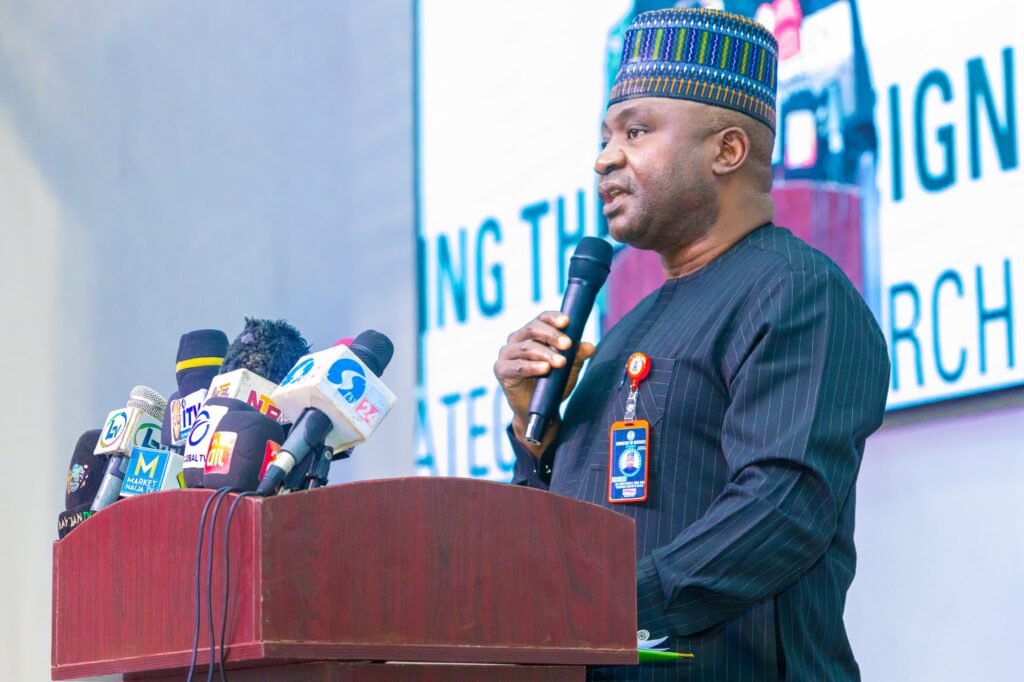
The Minister of Defence, General Christopher Gwabin Musa (Rtd.), has called for an urgent overhaul of Nigeria’s defence architecture to keep pace with emerging threats driven by artificial intelligence, cyber warfare, unmanned systems and other advanced technologies.
Musa said Nigeria must move beyond traditional approaches to national security and develop a more agile, integrated and forward-looking defence system capable of anticipating and responding to threats across the land, maritime, air and cyber domains.
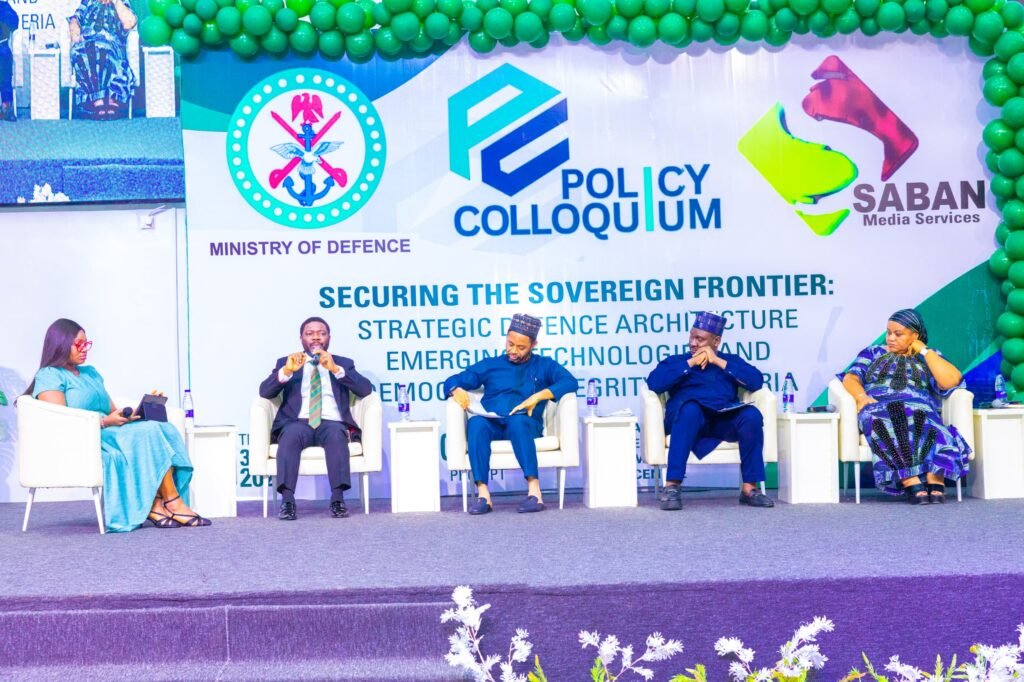
He made the call on Thursday, at the 2nd Policy Colloquium 2026, held under the theme, “Securing the Sovereign Frontier: Strategic Defence Architecture, Emerging Technologies and Democratic Integrity in Nigeria.”
The minister said the changing character of contemporary threats requires Nigeria to continuously reassess its capabilities, strengthen preparedness and remain ahead of developments capable of affecting its national interests.
He called for stronger intelligence coordination, joint operations and greater interoperability among the Armed Forces and other relevant security institutions.
“Our defence architecture must remain agile and forward looking, with the capacity to anticipate threats, respond decisively and protect Nigeria’s territorial integrity and vital national interests,” Musa said.
Musa identified artificial intelligence, unmanned systems, surveillance and reconnaissance, cyber capabilities and other emerging technologies as increasingly decisive factors in modern defence.
He said Nigeria must invest in relevant technologies while developing the human expertise, military doctrines and institutional capacity required to integrate them into national defence.
According to him, technological readiness will be critical to maintaining operational advantage and preparing the Armed Forces for future security challenges.
He also stressed the strategic importance of strengthening Nigeria’s defence industrial base, saying the country needs greater domestic capacity to support its long-term security requirements.
The minister said President Bola Ahmed Tinubu’s administration has reaffirmed its commitment to strengthening national security and providing the Armed Forces with the capabilities needed to protect the country.
He said the Ministry of Defence remains focused on strengthening defence capabilities and advancing military modernisation in response to the evolving security environment.
Musa noted that a secure and stable Nigeria is essential to protecting the country’s sovereignty, preserving democratic institutions and promoting national development.
In her welcome remarks, the Special Adviser to the Minister on Media, Leah Katung-Babatunde, said the traditional concept of a sovereign frontier is rapidly changing.
She said national defence now extends beyond physical borders into digital networks, satellite systems, automated technologies, algorithmic environments and information ecosystems that influence civic trust.
Katung-Babatunde said the colloquium was built around three interconnected priorities: strategic defence architecture, emerging technologies and democratic integrity.
She said Nigeria’s security institutions must become more agile, coordinated and predictive as asymmetric and multi-domain threats continue to evolve.
“Modern defence is no longer purely reactive; it must be predictive, integrated, and strategically resilient,” she said.
Katung-Babatunde said technologies such as artificial intelligence, cyber infrastructure, geospatial analytics and autonomous systems present major opportunities for strengthening Nigeria’s national security.
She urged Nigeria to transition from being a passive consumer of security technology to an active driver of technological sovereignty.
The Policy Colloquium brought together defence strategists, policymakers, technologists, civil society leaders, academics, media professionals and state actors to examine emerging security challenges and develop practical solutions.