
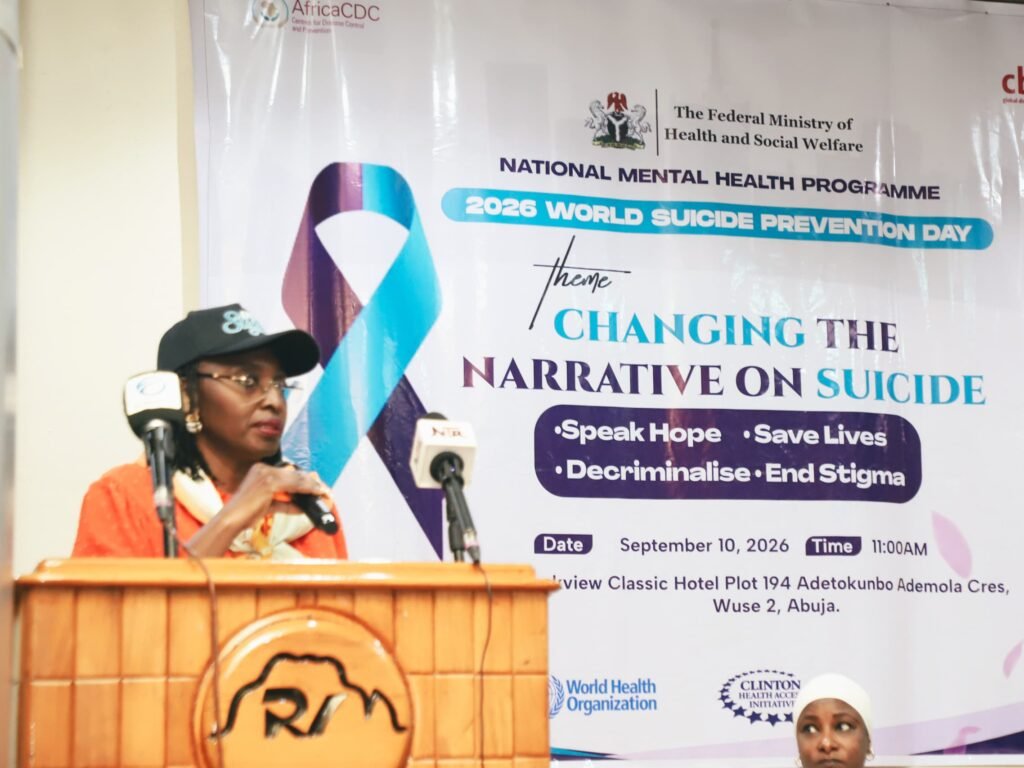
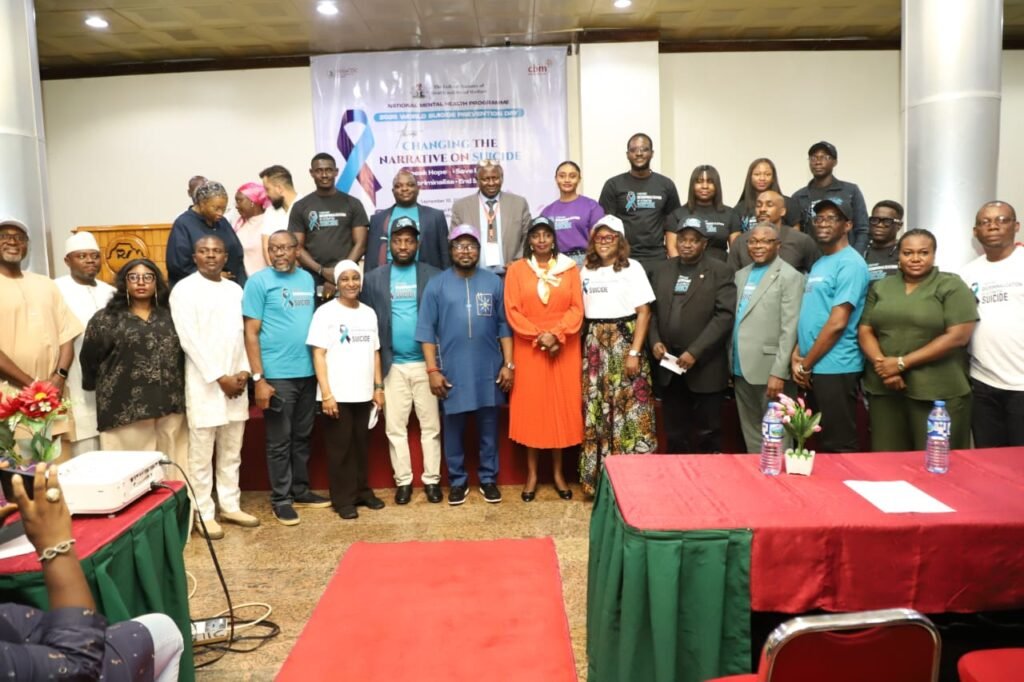
For someone who survives a suicide attempt, the moments that follow can be filled with fear, confusion and uncertainty. In Nigeria, those moments could soon begin to look different, as the Federal Government moves to replace the threat of criminal punishment with care and support for people experiencing mental health crises.
The move comes as Nigeria commemorates the 2026 World Suicide Prevention Day, with the Federal Executive Council approving the position of the Federal Ministry of Health and Social Welfare on the decriminalisation of attempted suicide.
The approval clears the way for the proposed reform to proceed to the National Assembly for the necessary legislative process.
Minister of State for Health and Social Welfare, Dr Iziaq Salako, announced the development in Abuja during the commemoration, held under the theme, “Changing the Narrative on Suicide.”
Represented by the Permanent Secretary of the Ministry, Daju Kachollom, the Minister described decriminalisation as more than a legal reform, saying it is also a public health and human rights imperative.
He said people experiencing mental health crises should receive care, support and timely intervention rather than punishment.
“Removing the fear of criminal sanctions can help reduce stigma, encourage help-seeking and create greater opportunities for timely intervention,” Salako said.
The Minister, however, cautioned that changing the law would not, on its own, prevent suicide.
He called for sustained investment in mental health services, early identification and intervention, community-based support and public awareness, while urging Nigerians to create an environment where people can speak openly about their mental health and seek help without fear of stigma or discrimination.
Government task force drives reform
The Federal Government has established a National Task Force on the Decriminalisation of Attempted Suicide to support the reform process.
The task force brings together government institutions, legal experts, mental health professionals, civil society organisations, development partners and people with lived experience.
According to the Ministry, the group has conducted extensive stakeholder consultations, engaged policymakers across the three arms of government, developed a Government White Paper and undertaken advocacy and public sensitisation on suicide prevention and decriminalisation.
The Ministry says the proposed reform is part of a wider national mental health response anchored on the National Mental Health Act 2021, National Mental Health Policy 2023 and National Suicide Prevention Strategic Framework 2023–2030.
Beyond changing the law
In his welcome remarks, the Director of Public Health, Dr Charles Nzelu, represented by the National Coordinator of the National AIDS and STIs Control Programme, Dr Adebobola Bashorun, said the Ministry remains committed to strengthening mental health promotion and suicide prevention.
He said the government is working to strengthen mental health services, integrate mental healthcare into primary healthcare, build the capacity of health workers, expand community-based interventions and deepen partnerships.
Nzelu also described the World Suicide Prevention Day commemoration as an opportunity to move beyond an annual observance towards concrete action, stronger partnerships and greater public awareness.
Nigeria’s suicide burden
Giving a global perspective, the Mental Health Programme Manager at the Clinton Health Access Initiative, Nigeria, Dr Akanmu Mujitaba, said suicide remains a major public health concern, with more than 700,000 people dying by suicide globally each year.
He cited World Health Organisation estimates that Nigeria records more than 7,000 suicide deaths and about 300,000 suicide attempts annually.
Behind those figures, he said, are families and communities affected by loss, underscoring the need for systems that combine effective policy with compassion and timely intervention.
Mujitaba commended the Federal Ministry of Health and Social Welfare and the National Mental Health Programme for advancing the decriminalisation process, while urging the government to ensure that the FEC approval progresses to full legislative passage.
As Nigeria marks World Suicide Prevention Day on September 10, the Federal Government is calling on healthcare professionals, the media, religious and traditional leaders, civil society organisations, youth groups and communities to help change the way suicide and mental health are discussed.
The broader message is clear: prevention requires more than legislation. It requires accessible mental health services, early intervention, community support and a society where people in distress can ask for help without fear.