
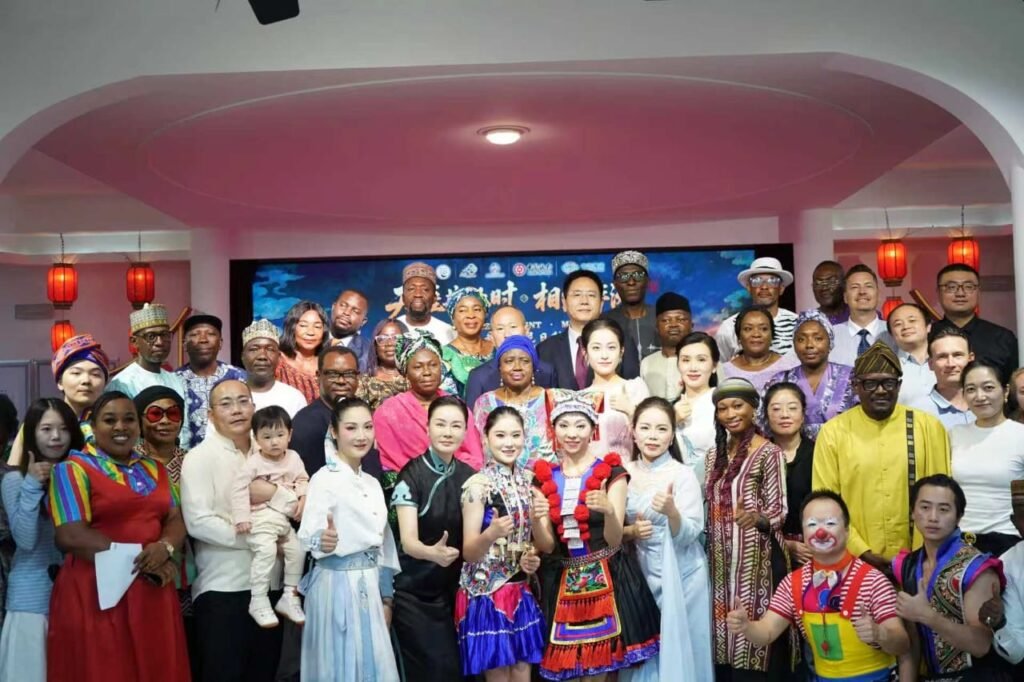
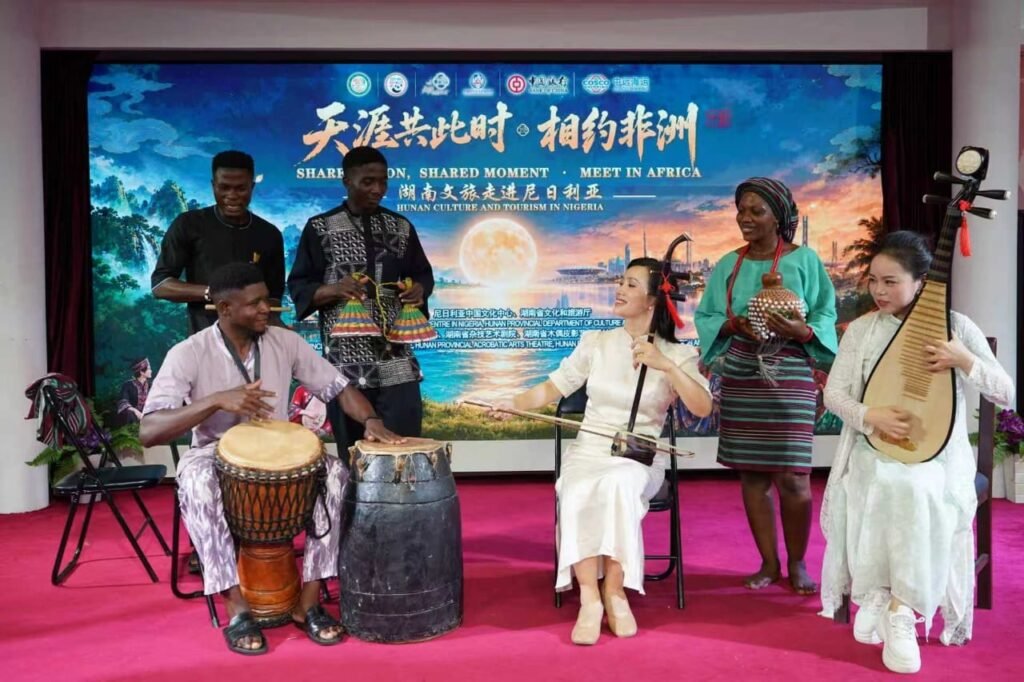
The Federal Government is positioning cultural exchange with China as a platform to expand Nigeria’s tourism industry, strengthen its creative economy and create new opportunities for artists, cultural practitioners and young creatives.
The Permanent Secretary, Federal Ministry of Arts, Culture, Tourism and Creative Economy, Abdulkarim Ozi Ibrahim, stated this in Abuja at a Nigeria-China cultural exchange programme, “Shared Moon, Shared Moment — Meet in Africa: Hunan Culture and Tourism in Nigeria.”
Represented by Musa Alhamdu, the Permanent Secretary said cultural diplomacy was no longer limited to showcasing a country’s traditions, but could also open doors for tourism, investment, skills development and international collaboration.
He said the Federal Government was committed to using Nigeria’s diverse cultural heritage and creative industries to contribute more significantly to national development.
“For us at the Federal Ministry of Arts, Culture, Tourism and Creative Economy, cultural diplomacy is an important instrument for strengthening international relations, promoting tourism and creating opportunities for our creative practitioners,” he said.
Ibrahim said cultural exchanges enable artists from different countries to travel, collaborate, learn from one another and expose new audiences to their cultural heritage.
He added that Nigeria’s rich mix of music, dance, theatre, visual arts, fashion, film, literature, festivals and traditional crafts provided a strong foundation for deeper cooperation with China.
According to him, the Federal Government sees Nigeria-China cultural cooperation not only as an avenue for artistic interaction, but also as an opportunity to develop partnerships, promote tourism, build skills and connect Nigerian creatives to the global creative economy.
The Permanent Secretary said the government was particularly interested in opportunities that could enable young Nigerians to participate more actively in the creative sector while creating employment and attracting investment.
The Hunan cultural delegation showcased aspects of Chinese heritage through music, dance, theatre, acrobatics, puppetry and shadow art, providing Nigerian audiences with an opportunity to experience the cultural traditions of the Chinese province.
Ibrahim described the exchange as a celebration of Nigeria-China friendship and a practical demonstration of how culture can bridge geographical and linguistic differences.
He also stressed the importance of preserving traditional cultural expressions and transmitting them to younger generations, saying heritage could serve as a foundation for creativity and innovation.
Delivering his remarks, the Cultural Counsellor of the Chinese Embassy and Director of the China Cultural Centre in Nigeria, Yang Jianxing, said the programme was designed to deepen mutual understanding and friendship between Nigerians and Chinese through culture and the arts.
He said Hunan Province had brought a programme featuring songs, dances, acrobatics and other performances, while Nigerian culture would also be showcased as part of the exchange.
Yang noted that Hunan has three World Heritage sites and nine elements inscribed on UNESCO’s Representative List of the Intangible Cultural Heritage of Humanity.
He said the province had maintained growing ties with Nigeria in trade, investment, culture and people-to-people relations, with Changsha, the Hunan capital, serving as the permanent host city of the China-Africa Economic and Trade Expo since 2019.
According to him, the cultural exchange provides an opportunity for Nigerians to discover Hunan while giving members of the Chinese community in Abuja a deeper understanding of Nigeria’s cultural heritage.
He encouraged more Nigerians to visit Hunan and experience its cultural and tourism attractions, while calling for stronger exchanges between Hunan and Abuja.
The Chinese official said the programme was also significant as Nigeria and China mark 55 years of diplomatic relations, with 2026 designated as the China-Africa Year of People-to-People Exchanges.
Also speaking, the Permanent Secretary, Social Development Secretariat of the FCT Administration, Olubunmi Olowokere, said Abuja offered significant opportunities for collaboration with Hunan in cultural exchange, creative industries, heritage promotion, tourism and skills development.
She said cultural encounters could help people from different countries move beyond simply knowing about one another to experiencing each other’s traditions.
“When a Nigerian watches a Chinese cultural performance, or when a visitor from China experiences Nigerian music and traditional arts, something important happens. We move from simply knowing each other to experiencing each other. And that experience creates understanding,” she said.
Olowokere called for cultural cooperation to move beyond one-day celebrations, urging artists, museums, cultural centres, tourism professionals, performing arts organisations and creative entrepreneurs from both countries to establish long-term institutional partnerships.
She also encouraged Chinese visitors to explore Abuja and other Nigerian tourism destinations, while urging Nigerians to discover Hunan and other tourism opportunities in China.
The Federal Government said sustained cultural exchanges could strengthen Nigeria’s international cultural relations while helping transform the country’s cultural assets into opportunities for tourism development, creative enterprise, investment and employment.