
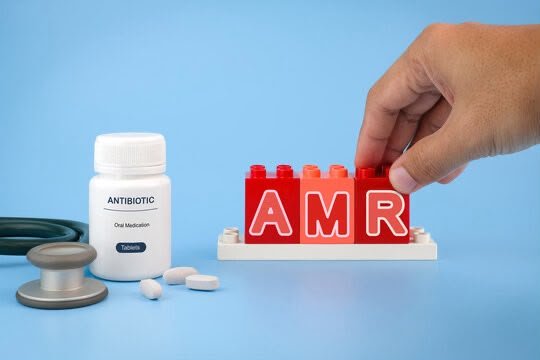
What began as a headache in 2012 turned into a 13-year medical battle for Rob Purdie, an antimicrobial resistance (AMR) survivor whose experience is now being used to highlight the human cost of drug-resistant infections.
Purdie, a member of the World Health Organisation’s Task Force of AMR Survivors, shared his story at the European Parliament exhibition, “AMR: The Human Stories Behind a Silent Pandemic,” in Brussels.
He said his ordeal began with what doctors initially diagnosed as a sinus infection.
After completing a 10-day course of antibiotics without improvement, Purdie said he was prescribed another antibiotic by a second doctor.
It was only after he was referred to an ear, nose and throat specialist that further investigations showed he did not have a sinus infection.
His condition later deteriorated, with severe headaches, nausea, sensitivity to light and eventually vision problems.
Purdie said he was eventually admitted to hospital, where a lumbar puncture led to the diagnosis of a fungal infection that had progressed to meningitis.
He said the experience exposed the consequences of delayed diagnosis, adding that earlier access to the right diagnostic tests might have prevented the infection from progressing.
The infection, known as valley fever or coccidioidomycosis, proved difficult to treat. Purdie said he went through several antifungal medicines before being placed on a combination therapy that included amphotericin B, which was administered directly into his brain.
The treatment came with severe side effects. He said one antifungal caused photosensitivity and contributed to a squamous cell carcinoma in 2015, and he has since had five more of the cancers removed.
More than a decade later, Purdie said his current medication controls rather than cures the infection.
The illness also had major economic and personal consequences. He said he was unable to work for about five years, leaving his family dependent on social safety nets while he dealt with the financial and emotional effects of the disease.
His experience formed part of the call by WHO for stronger and more coordinated action against AMR.
Acting Director of WHO’s Antimicrobial Resistance Division, Dr Jean-Pierre Nyemazi, said drug-resistant infections are affecting people, animals, plants, food systems, economies and the environment, making a coordinated “One Health” approach essential.
Nyemazi said about one million people die every year from drug-resistant bacteria alone, describing AMR as a growing threat that also increases hospital stays, healthcare costs and the burden on families.
He called on governments to back their AMR commitments with legislation, financing and accountability, while strengthening infection prevention, vaccination, access to quality medicines and diagnostics, surveillance and responsible antimicrobial use.
He also urged countries to improve regulation of antibiotic sales, noting that in some settings people can obtain antibiotics directly from pharmacies without prescriptions because of limited access to healthcare and public demand.
Nyemazi said governments should strengthen primary healthcare, while digital systems could help monitor medicines dispensed by pharmacies and support enforcement of regulations.
He stressed that no single intervention would solve AMR, pointing to the need for cooperation among governments, health professionals, pharmacies, civil society and the private sector.
The WHO official also highlighted the need for new antibiotics, antifungals and other treatments, alongside better diagnostics and stronger stewardship of existing medicines.
Meanwhile, Member of the European Parliament, Martin Häusling, drew attention to antimicrobial use in agriculture, warning against unnecessary mass treatment of livestock and the continued use of important antibiotics in food-producing animals.
He said the exhibition was designed to help policymakers understand that AMR is not an abstract public health issue, but one capable of affecting individuals, families and livelihoods.
For Purdie, the response must ultimately focus on people living with the consequences of AMR.
He called for greater public awareness, better diagnostics, vaccination, improved water, sanitation and hygiene, responsible use of medicines and continued investment in new treatments.
The exhibition, organised by WHO and Häusling, runs from September 28 to October 2, 2026, at the European Parliament and features personal stories of people affected by antimicrobial resistance.