
Written by
Ishioma Appiah-Yeboah
The Nigeria Centre for Disease Control and Prevention (NCDC) has confirmed that Nigeria has not recorded any case of Ebola Virus Disease (EVD) linked to the ongoing outbreak in East and Central Africa, even as health authorities intensify nationwide preparedness measures to prevent a possible outbreak.
In a public health update issued by the Director-General of the NCDC, Dr. Jide Idris, the agency said the World Health Organization’s declaration of the Ebola outbreak as a Public Health Emergency of International Concern (PHEIC), alongside rising cases in the Democratic Republic of Congo (DRC) and Uganda, has triggered heightened surveillance and emergency response activities across Nigeria.
According to the NCDC, a recent dynamic risk assessment classified the risk of Ebola importation into Nigeria as high due to increased international travel, cross-border movement, and ongoing transmission in affected countries.
The agency noted that Ebola symptoms can resemble common illnesses such as malaria and Lassa fever, which may delay early detection and response.
The assessment also identified high-risk states, border communities, major transport hubs, and points of entry requiring intensified monitoring.
Despite the elevated risk, the NCDC said Nigeria has built strong response capacity from previous outbreaks, including trained Rapid Response Teams, functional Emergency Operations Centres (EOCs), laboratory testing capability, and established Viral Haemorrhagic Fever preparedness structures.
The agency disclosed that the National Emergency Operations Centre has been placed on alert mode, while the National Incident Management System has been activated to strengthen coordination and rapid response in the event of a suspected case.
Epidemiologists and Rapid Response Teams across the country have also been placed on standby for immediate deployment where necessary.
The NCDC added that it is strengthening collaboration with State Ministries of Health, Port Health Services, and other relevant agencies to sustain preparedness efforts nationwide.
Surveillance activities have also been intensified across the country, particularly at border communities and international points of entry.
According to the agency, it is working closely with Disease Surveillance and Notification Officers (DSNOs), healthcare facilities, and state epidemiologists to improve early detection, reporting, and response to suspected cases.
The agency further stated that monitoring of rumours, unusual illnesses, and public health alerts has been strengthened as part of ongoing epidemic intelligence efforts.
As part of infection prevention and control measures, the NCDC said Ebola preparedness checklists and readiness tools have been distributed to healthcare facilities nationwide.
Healthcare workers are also undergoing refresher training on triage systems, infection prevention protocols, and early identification of Viral Haemorrhagic Fever cases.
State governments have additionally been advised to designate isolation centres, assess bed capacity, strengthen ambulance systems, and ensure the availability of emergency medical supplies.
The agency confirmed that Nigeria maintains laboratory testing capability for Ebola, particularly in states with international points of entry, while laboratory networks are strengthening sample collection, transportation, biosafety, and rapid diagnosis systems.
The NCDC also warned Nigerians against spreading rumours and misinformation about Ebola, noting that public awareness campaigns and risk communication activities have been intensified to combat false information circulating online.
The agency has released educational materials aimed at debunking myths surrounding Ebola transmission and prevention.
Ebola Virus Disease is a severe viral illness transmitted through direct contact with infected blood, bodily fluids, or contaminated materials. The disease does not spread through the air.
Symptoms may appear between two and 21 days after exposure and include fever, weakness, headache, muscle pain, sore throat, vomiting, diarrhoea, and in severe cases, unexplained bleeding.
The NCDC urged Nigerians to maintain regular hand hygiene, avoid contact with bodily fluids of sick persons, and promptly seek medical attention if symptoms develop.
Travellers arriving from countries with confirmed Ebola cases have also been advised to monitor their health for 21 days and immediately contact health authorities if symptoms appear.
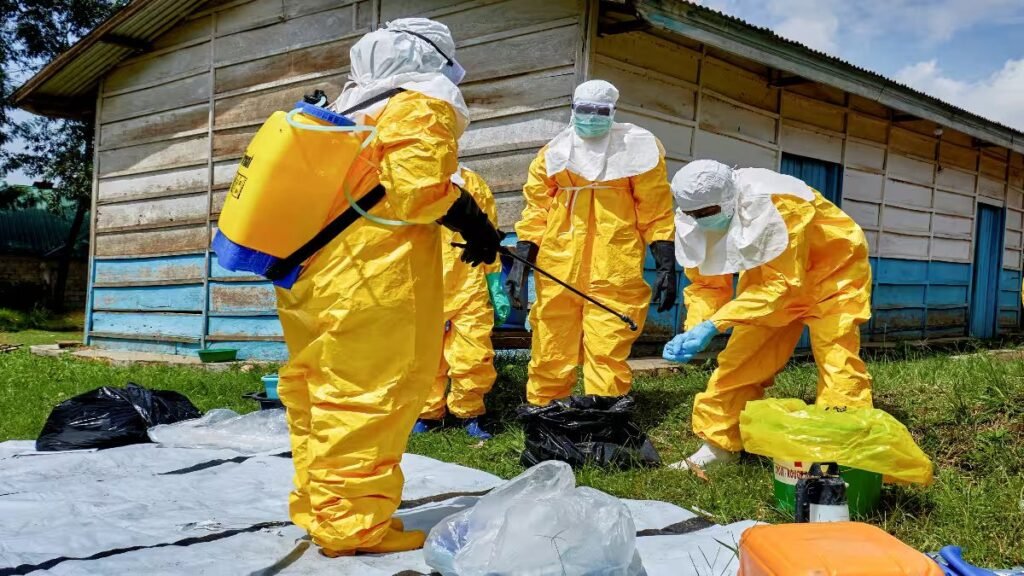
Healthcare workers were equally advised to maintain a high level of vigilance and strictly adhere to infection prevention and control measures, including the proper use of Personal Protective Equipment (PPE), hand hygiene, safe sample handling, and prompt reporting of suspected cases.
The agency reassured Nigerians that there is currently no confirmed Ebola case in the country linked to the ongoing regional outbreak, while stressing that early reporting, responsible health-seeking behaviour, and public cooperation remain critical to preventing transmission.