
Written by
Ishioma Appiah-Yeboah
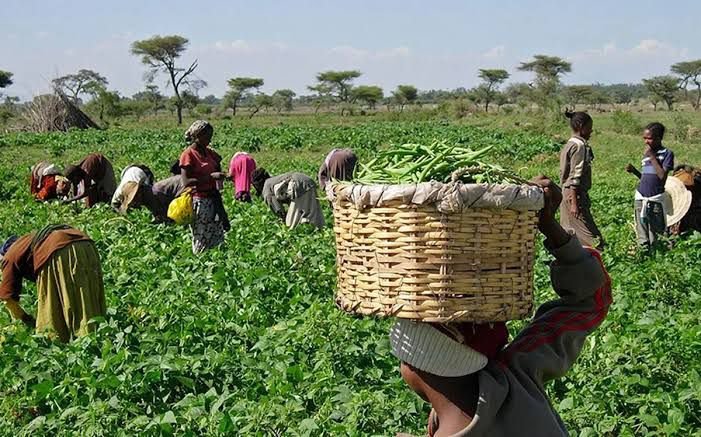
As Nigeria grapples with rising food prices, climate shocks, declining agricultural productivity, and growing concerns over public health and environmental sustainability, a coalition of farmers, scientists, civil society groups, and policy advocates has called on the Federal Government to halt the approval of new genetically modified organisms (GMOs) and adopt agroecology as a cornerstone of the nation’s food security strategy.
The call was made at the end of the National Conference on Biosafety and Agroecology in Abuja, where stakeholders warned that Nigeria’s increasing reliance on genetically modified crops could pose long-term risks to biodiversity, indigenous seed systems, farmers’ livelihoods, and ecological sustainability if not subjected to stronger oversight and independent scientific scrutiny.
The conference, convened by the Health of Mother Earth Foundation (HOMEF) in collaboration with Corporate Accountability and Public Participation Africa (CAPPA), Kebetkache Women Development and Resource Centre, GMO-Free Nigeria Alliance, and other partners, brought together representatives from government agencies, research institutions, farmers’ associations, civil society organisations, traditional institutions, youth groups, and the media.
Growing Food Crisis Raises Urgency
Nigeria remains Africa’s most populous country, with an estimated population exceeding 230 million people, while food insecurity continues to worsen across many regions.
According to recent food security assessments, millions of Nigerians face varying levels of food insecurity due to a combination of conflict, climate change, inflation, and disruptions to agricultural production.
Food inflation has remained one of the highest contributors to the rising cost of living, forcing many households to spend a significant portion of their income on basic food items.
Agriculture contributes roughly 25 percent of Nigeria’s Gross Domestic Product and provides employment for more than one-third of the country’s workforce, making the sector critical to economic stability and national development.
Against this backdrop, participants argued that addressing food insecurity requires more than technological interventions alone.
“Food security must be built on ecological sustainability, farmers’ rights, public accountability, and resilient local food systems,” participants stated in the conference communiqué.
GMO Expansion Sparks Debate
Nigeria has approved the cultivation and commercialisation of several genetically modified crops in recent years, including Bt Cowpea, TELA Maize, and transgenic cotton varieties.
Supporters of GM technology argue that these crops can help improve yields, enhance resistance to pests, and strengthen food production in the face of climate challenges.
However, conference participants expressed concerns over what they described as insufficient long-term studies on the environmental, health, and socio-economic impacts of GMO adoption in Nigeria.
They warned that the widespread introduction of genetically modified crops could contribute to:
- Loss of indigenous seed varieties
- Increased dependence on proprietary seed systems
- Genetic contamination of local crops
- Expansion of monoculture farming practices
- Greater dependence on agrochemicals and pesticides
- Threats to biodiversity and ecosystem stability
The stakeholders also highlighted concerns about Highly Hazardous Pesticides (HHPs), which they say continue to threaten human health, soil fertility, water resources, and biodiversity.
Agroecology Presented as a Sustainable Alternative
Rather than relying primarily on biotechnology-driven agricultural solutions, participants advocated for agroecology as a more sustainable pathway for Nigeria.
Agroecology combines scientific knowledge with traditional farming practices to promote biodiversity, improve soil health, strengthen climate resilience, and reduce dependence on expensive chemical inputs.
Participants argue that agroecological systems can help farmers adapt to climate change while improving food production and protecting ecosystems.
The conference noted that agroecology has demonstrated significant potential to:
- Improve soil fertility and long-term productivity
- Enhance biodiversity conservation
- Increase resilience to droughts and extreme weather
- Strengthen farmer incomes and livelihoods
- Reduce environmental degradation
- Support healthier food systems
Participants also stressed that women and young people, who play crucial roles in food production, continue to face barriers in accessing land, financing, technology, and agricultural decision-making processes.
A major focus of the conference was the need to strengthen Nigeria’s biosafety governance framework.
Participants argued that current biosafety approval processes require greater transparency, accountability, scientific independence, and public participation.
Among the resolutions adopted was a call for a comprehensive review of all GMO approvals and biosafety governance mechanisms currently in place.
The conference also resolved to strengthen public awareness on the environmental, social, economic, and health implications of GMO adoption and associated agrochemical use.
Call To Action
In a strongly worded appeal, participants urged the Federal Government to take immediate action by:
- Declaring a moratorium on new GMO approvals pending independent long-term assessments
- Conducting transparent and science-based reviews of existing GMO approvals, including Bt Cowpea, TELA Maize, and transgenic cotton
- Strengthening public agricultural research institutions and extension services
- Reviewing the National Biosafety Management Agency Act to improve transparency and accountability
- Protecting farmers’ rights to save, exchange, and reuse indigenous seeds
- Supporting community seed banks and local breeding initiatives
- Establishing a roadmap to phase out Highly Hazardous Pesticides
- Increasing investment in agroecological research, training, and innovation
- Requiring independent long-term studies on the environmental, health, and socio-economic impacts of GMOs
Participants concluded that Nigeria’s future food security depends on balancing productivity with environmental protection, public health, and social justice.
They emphasized that food systems should not only produce enough food but also preserve biodiversity, protect rural livelihoods, empower farmers, and ensure long-term sustainability for future generations.
As Nigeria confronts rising food insecurity, climate pressures, and economic uncertainty, stakeholders say the time has come for policymakers to rethink the country’s agricultural trajectory and place ecological sustainability and food sovereignty at the centre of national development planning.
The communiqué was adopted in Abuja and endorsed by a broad coalition of organisations, including HOMEF, CAPPA, Kebetkache Women Development and Resource Centre, GMO-Free Nigeria Alliance, Organic and Agroecology Initiative, Environmental Rights Action, Women and Youth in Agriculture, Cassava Growers Association, and several environmental and farmer-focused groups.