
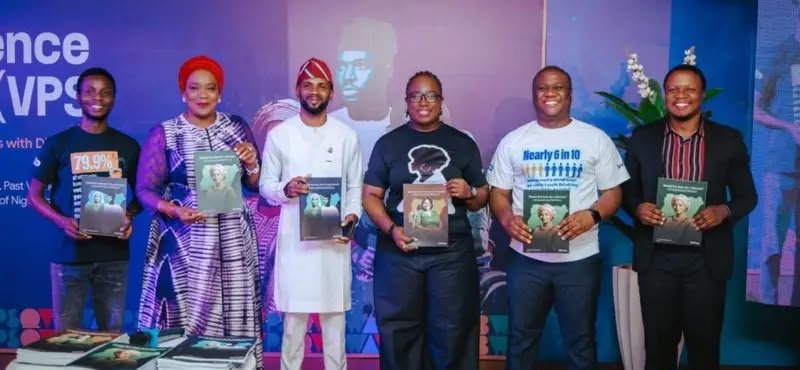
A new survey has challenged the long-held belief that Nigerian voters are unwilling to elect women and young people, with a majority of respondents saying they are prepared to support candidates from underrepresented groups in the 2027 general elections.
The Voters’ Preference Survey (VPS), conducted by Invictus Africa, covered 11,196 eligible voters across Nigeria’s 36 states and the Federal Capital Territory.
The survey found that 64.4 per cent of Nigerians are willing to vote for women, while 74.9 per cent said they would definitely participate in the 2027 elections.
The findings offer fresh insight into the prospects of women, young people and persons with disabilities in the 2027 elections, while highlighting a crucial gap between voters’ stated preferences and what ultimately happens at the polling unit.
Presenting the findings, the Executive Director of Invictus Africa, Bukky Shonibare, said the survey was conducted to hear directly from voters about their past voting behaviour, their intentions for 2027 and the conditions that could influence them to translate those intentions into actual votes.
According to her, 69.1 per cent of Nigerians surveyed said they had never voted for a woman, despite women having contested elections over the years.
She said the survey therefore goes beyond the question of whether women, young people and persons with disabilities can emerge as candidates, to examining how they can actually win elections once they are on the ballot.
“People want them to put their merit forward and not their identity,” Shonibare said, stressing that voters are more concerned about candidates’ qualifications, credibility and track record than their gender, age or disability.
The survey found that Nigerians are more willing to support women in legislative positions than executive offices.
More than 70 per cent of respondents indicated that they would vote for women seeking seats in the House of Representatives, followed by the State Houses of Assembly and the Senate, while willingness to support a woman for president was comparatively lower.
Shonibare said the findings were particularly relevant as political parties and candidates move into the campaign phase ahead of the 2027 elections.
She, however, cautioned that expressing an intention to vote for a particular category of candidates does not necessarily mean voters will make the same choice on election day.
She identified factors such as insecurity, accessibility, violence, threats and vote buying as issues that could potentially influence voters’ decisions.
“ To determine the extent of this gap, Invictus Africa plans to conduct a post-election survey involving respondents from the pre-election study, she added “
She noted that Invictus Africa will also compare what voters said they intended to do with what they actually did at the polls, providing data on the factors that may have influenced any differences.
Representing the Minister of Women Affairs, Hajiya Imaan Sulaiman-Ibrahim, the ministry’s Technical Assistant, Precious Agharese-Esai, described the report as a significant development in understanding women’s political participation in Nigeria.
She said the findings provide a fresh perspective that could strengthen advocacy efforts aimed at improving women’s inclusion and representation in governance and elective positions across the country.
According to her, understanding voters’ preferences is critical to designing more effective strategies for addressing the persistent gap in women’s political representation.
Also speaking, the Founder and Chief Executive Officer of Women Radio 97.1FM, Mrs Toun Sonaiya, described the survey as an important resource for political parties, candidates and other political actors preparing for the 2027 elections.
Sonaiya said politicians should pay closer attention to the views and preferences of actual voters, rather than relying solely on assumptions about what the electorate wants.
“The people who matter are those who have voters’ cards and will vote on election day,” she said.
“Any politician who wants to win elections must understand the mindset of those voters, and that is exactly what this survey has provided.”
The Head of Data and Research at Invictus Africa, Gabriel Mbwogu, said the survey was prompted by the persistent underrepresentation of women, young people and persons with disabilities in Nigerian politics.
He noted that women account for nearly half of Nigeria’s population and a significant proportion of registered voters, while young people constitute the country’s largest voting bloc. Persons with disabilities also represent a substantial population group, yet all three categories remain significantly underrepresented in political office.
Mbwogu said the findings show that Nigerian voters are generally open to electing women, young people and persons with disabilities, but structural barriers remain a major challenge.
He urged political parties and other stakeholders to create greater opportunities for candidates from these groups to emerge on the ballot.
He also advised women, young people and persons with disabilities seeking elective office to build credible track records and campaign on competence, qualifications, honesty and credibility.
The survey comes amid longstanding concerns over the limited number of women occupying elective political positions in Nigeria, despite women making up a substantial proportion of the country’s population and electorate.
With the 2027 elections approaching, the findings place the focus not only on who gets on the ballot, but on whether candidates can convert voters’ stated willingness into actual votes when Nigerians head to the polling units.