
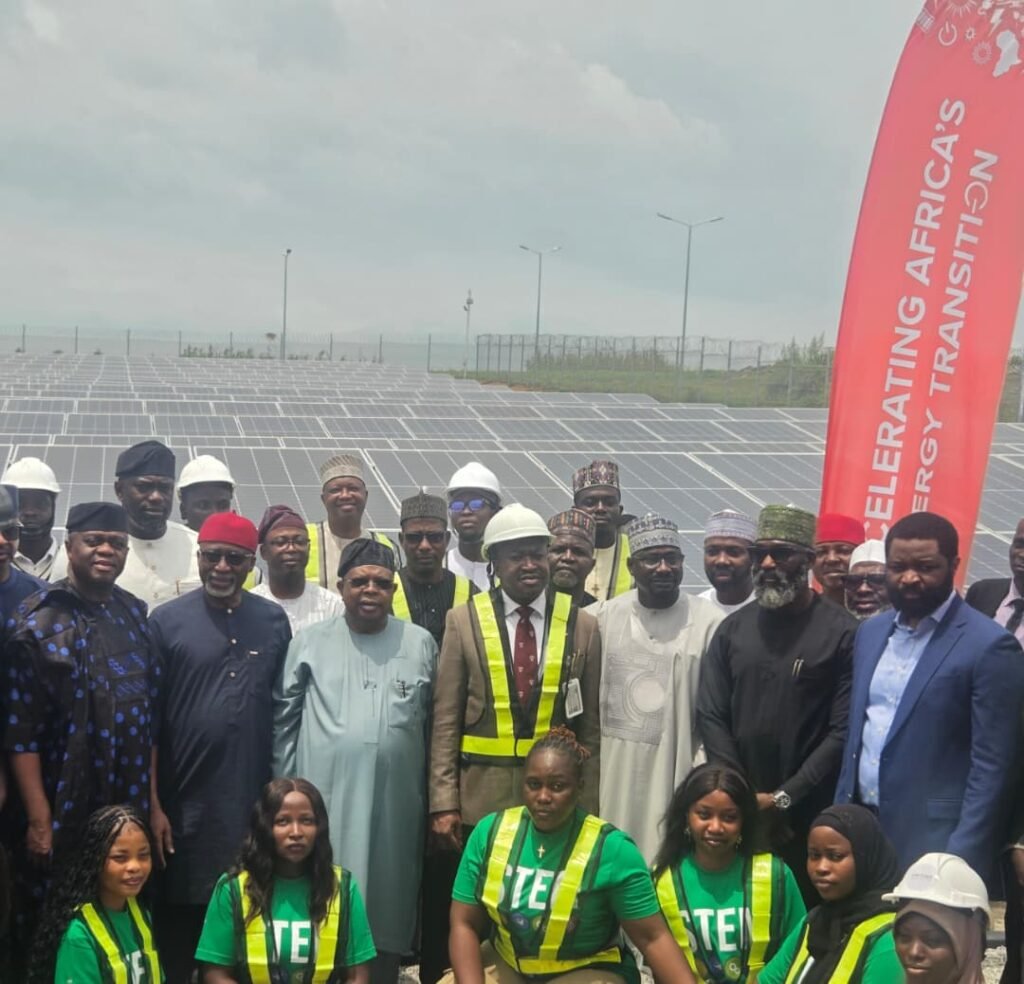
Nearly 40,000 students and more than 3,500 staff at Yakubu Gowon University, Abuja, are set to benefit from improved electricity supply following the commissioning of a 3MW captive solar hybrid power project by the Federal Government.
The project is designed to provide more reliable electricity for teaching, research, laboratories, digital services and other critical operations at the university, which has more than 8,000 students living on campus.
Commissioning the facility on Wednesday, Minister of Power, Joseph O. Tegbe, said the project demonstrates how Nigeria’s energy transition can directly support human capital development.
He said universities provide an important test of the value of reliable and cleaner energy because they depend on electricity for learning, research, technology and increasingly digital academic services.
But beyond the commissioning ceremony, the Minister said the focus must now shift to keeping the facility operational and sustainable.
“The commissioning is not the conclusion of the investment. It is the beginning of its most important phase,” Tegbe said.
The project was delivered under Phase Two of the Energizing Education Programme ( EEP), implemented by the Rural Electrification Agency (REA) through the World Bank-funded Nigeria Electrification Project (NEP).
REA Managing Director and Chief Executive Officer, Abba Aliyu, said the programme was designed to go beyond installing solar infrastructure by creating the conditions for students to learn, lecturers to teach, researchers to work and laboratories to function with greater certainty.
According to REA, renewable energy infrastructure under the programme has so far been delivered to 22 federal universities and three affiliated teaching hospitals, with more than 100 megawatts of clean energy deployed nationwide.
The agency says the projects have impacted more than 600,000 students and 50,000 academic and administrative staff.
Aliyu, however, stressed that building renewable energy infrastructure must be matched with effective maintenance and long-term management.
He said this experience contributed to the establishment of the Renewable Asset Management Company, RAMCO, which is expected to strengthen the management and performance of renewable energy assets.
The Yakubu Gowon University project also goes beyond power generation.
It includes a Renewable Energy Workshop and Training Centre, providing opportunities for practical learning and skills development in renewable energy technologies.
The programme also has a female STEM component, giving students practical exposure to renewable energy and potential career opportunities in the sector.
Vice-Chancellor of the university, Professor Hakeem Babatunde Fawehinmi, described the project as an investment in the institution’s academic mission.
He said dependable electricity was essential for effective teaching, research, laboratory operations and digital services.
Meanwhile , Chairman of the Senate Committee on Power, Senator Enyinnaya Abaribe, stressed the importance of sustainability, urging appropriate arrangements for the operation, maintenance and protection of the facility.