
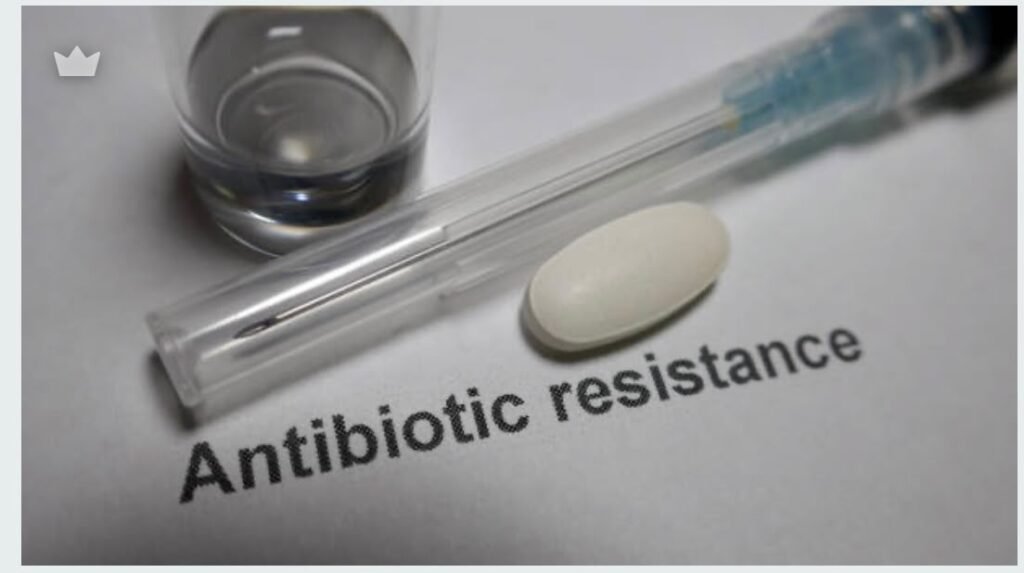
Repeated medication, temporary relief and a laboratory test that showed the antibiotics tested were ineffective against the bacteria behind her infection. For 32-year-old businesswoman Farida Abdulrahman, the experience offers a personal glimpse into antimicrobial resistance, a growing public health threat Nigeria is working to contain.
“Some years ago, I was home alone and I started feeling severe body pain, headache and a bit feverish,” Farida recalled.
Concerned about her condition, she contacted a friend who is a doctor, hoping to get treatment before visiting a hospital the following day.
“So I told myself that I needed first aid, that I needed an urgent treatment before I can go to the hospital the following day,” she said.
Her friend advised her to visit a nearby pharmacy and hand the phone to the attendant so they could discuss her symptoms. She was given medication for malaria and antibiotics.
“When I started taking them, I felt there was no need going to the hospital again,” Farida said.
But the relief she expected did not come. She completed the medication without feeling better. Her friend subsequently prescribed another set of medicines, including antibiotics, and what she recalled as intravenous medication.
The treatment offered only temporary relief.
“So just for some week or so, I felt a little bit relieved and it came back again,” she said.
After several attempts to treat the illness, Farida eventually went to a hospital, where tests identified typhoid. A culture and sensitivity test showed that the antibiotics tested were not effective against the bacteria isolated from her infection.
“The doctor told me that I had become resistant to antibiotics because my body wasn’t sensitive to any of them,” she recalled.
Although antibiotic resistance develops in bacteria rather than in the human body, Farida’s experience highlights the importance of testing, appropriate treatment and medical supervision when an infection does not respond to medication.
When medicines stop working
Antimicrobial resistance occurs when bacteria, viruses, fungi and parasites no longer respond to medicines designed to treat the infections they cause. Antibiotic resistance, a major part of the wider problem, happens when bacteria become resistant to antibiotics.
The consequences can be serious. Infections may become harder to treat, patients may require more expensive medicines or longer hospital stays, and the risk of complications and death can increase.
The inappropriate use of antibiotics contributes to the problem. Taking them when they are not needed, using the wrong medicine, or failing to follow a prescribed treatment plan can encourage resistant bacteria to emerge and spread.
Antibiotics do not treat viral infections such as the common cold or influenza. Yet some people still seek them for illnesses without confirming whether a bacterial infection is responsible.
However, symptoms that persist after treatment do not automatically mean a person has an antibiotic-resistant infection. The original diagnosis may be wrong, the medicine may not be appropriate, or other medical factors may be responsible. Persistent or worsening symptoms require reassessment by a qualified health professional.
Pate warns of a ‘silent pandemic’
Nigeria’s Coordinating Minister of Health and Social Welfare, Professor Muhammad Ali Pate, has described antimicrobial resistance as a growing but often overlooked threat.
Speaking at a joint ministerial briefing in Abuja on October 12, 2026, ahead of the Fifth Global High-Level Ministerial Conference on Antimicrobial Resistance, Pate said the problem was already affecting patient outcomes in healthcare facilities.
“AMR is a hidden pandemic. It’s silent,” he said.
He explained that patients with common infectious diseases could experience prolonged illness when the medicines prescribed were ineffective against the organisms causing their infections.
“Folks go to hospitals, get treated for pneumonia, typhoid, or whatever infectious disease. In some places, without proper knowledge of the sensitivity to the antimicrobial being used, individuals may suffer much longer than they should and some may have complications or lose their lives,” Pate said.
He added that Nigerian hospitals were already encountering difficult-to-treat infections.
“The reality is that there is antimicrobial resistance here and there are cases in our hospitals of complicated pneumonia that have multiple antibiotics and don’t get better,” he said.
For Pate, the complexity of the threat demands coordinated action across government and other sectors.
“It’s a complicated problem and that is exactly why we’re approaching it from a whole-of-government perspective,” he said.
The human and economic cost of resistant infections
Beyond the immediate medical consequences, antimicrobial resistance can place a heavy financial burden on patients, families and the wider economy.
Dr Sati Ngulukun, Director of Bacteriology, Parasitology and Virology at the National Veterinary Research Institute in Vom, Plateau State, said resistant infections contribute to illness and deaths while undermining productivity.
“AMR is a global health threat, and Nigeria is no exception. It causes significant mortality and morbidity,” he said.
Ngulukun explained that when infections become difficult to treat, patients may spend more time recovering, miss work and incur additional healthcare expenses.
“When people are sick and can’t be treated with antibiotics, they can’t work, resulting in lost productivity and income, which can ultimately affect the country’s economy,” he said.
For households already struggling with the cost of healthcare, the need for further tests, prolonged treatment or more expensive alternative medicines can make an illness even harder to manage.
A threat that extends beyond hospitals
Antimicrobial resistance is not confined to hospitals or human medicine. Resistant microorganisms can also emerge and spread among animals and through the environment, making the problem a shared public health concern.
This interconnectedness underpins the One Health approach, which recognises that the health of people, animals and the environment is closely linked.
Ngulukun warned that agricultural practices can create pathways through which resistant microorganisms reach people.
“Farmers in Nigeria often use animal dung as manure. If the dung contains AMR pathogens, these can contaminate vegetables,” he said.
This highlights the importance of safe manure handling, clean water, food hygiene and responsible antimicrobial use in both human and animal health.
The approach also requires cooperation among healthcare professionals, veterinarians, farmers, environmental specialists, regulators and policymakers. Without coordinated surveillance and responsible practices across these sectors, efforts to contain resistance in hospitals alone may not be sufficient.
Nigeria strengthens its response
Nigeria is implementing its Second One Health National Action Plan on Antimicrobial Resistance, covering 2024 to 2028. The plan is intended to strengthen the country’s response through improved surveillance, laboratory capacity, public awareness and responsible antimicrobial use.
Pate acknowledged that gaps remain in Nigeria’s ability to monitor and accurately measure the problem.
“I have to admit that there are still gaps in surveillance, so the accuracy of Nigerian numbers may not be the same as what you may hear, let’s say, in the Nordic countries or in the Western countries,” he said.
Better surveillance is essential for identifying resistant organisms, understanding where they are spreading and guiding treatment policies.
Pate said the Federal Ministry of Health and Social Welfare had also been pursuing antimicrobial stewardship in federal hospitals, alongside broader efforts to strengthen clinical governance and involve relevant regulatory agencies.
“It’s a multifaceted strategy that we’re pursuing,” he said.
Antimicrobial stewardship promotes the appropriate selection, dosage and duration of medicines to ensure that patients receive effective treatment while reducing unnecessary exposure to antimicrobials.
Why culture and sensitivity testing matters
Farida’s experience underscores the importance of finding out which organism is causing an infection and which medicines are likely to work against it.
A culture test can help identify bacteria or other microorganisms responsible for an infection. Sensitivity testing can then assess which antibiotics are likely to be effective against the bacteria isolated.
Such tests can help clinicians make more informed treatment decisions, particularly when an infection is severe, recurrent or not responding to initial treatment.
Testing is not necessary for every illness, and clinicians determine when it is appropriate based on the patient’s symptoms, examination and medical history.
The key message is that persistent symptoms should not automatically lead to repeated courses of antibiotics without a medical reassessment. Taking antibiotics without proper guidance may expose patients to unnecessary risks and contribute to resistance.
Farida’s account is a reminder that seeking medical advice early and following evidence-based treatment can help reduce delays in receiving appropriate care.
Nigeria prepares for global AMR conference
Nigeria is preparing to host the Fifth Global High-Level Ministerial Conference on Antimicrobial Resistance in Abuja from December 6 to 8, 2026. The meeting will be the first time the conference is held on African soil.
With the theme “One Health: Advancing Global AMR Commitments to Local Action,” the conference is expected to bring together government representatives, scientists, health professionals and other stakeholders to discuss practical responses to the growing threat.
Discussions are expected to focus on translating global commitments into national action, strengthening surveillance and laboratory systems, promoting responsible antimicrobial use and improving collaboration across human, animal and environmental health.
The conference is also expected to advance the proposed Abuja Compact and a mechanism for tracking progress on commitments made by participating countries.
Pate has stressed the need to support research and the development of new antimicrobial medicines, including through biodiversity, research and development, and commercialisation.
However, the development of new medicines alone will not resolve the problem. Existing antibiotics must also be preserved through appropriate prescribing, responsible use and effective infection prevention.
What Nigerians can do to protect antibiotics
Health professionals say individuals can contribute to the fight against antimicrobial resistance by taking antibiotics only when prescribed by a qualified health professional and using them according to the instructions given.
People should not share antibiotics, use leftover medicines or buy them for self-treatment. They should also avoid pressuring health professionals to prescribe antibiotics when they are not clinically necessary.
Good hygiene, handwashing, vaccination, safe food preparation and clean water can help prevent infections and reduce the need for antimicrobial medicines.
When treatment does not appear to be working, patients should return to a qualified health professional for reassessment rather than independently switching medicines or repeating prescriptions.
Beyond Farida’s experience
For Farida, the consequences of her experience have not entirely disappeared.
“And to date, I still have issues with that when it comes to treatment and using antibiotics,” she said.
Her story is one personal account, not proof that every unsuccessful treatment is caused by antimicrobial resistance. But it illustrates why infections that persist or return need proper medical evaluation and why antibiotics should be used carefully.
As Nigeria strengthens surveillance, improves laboratory capacity and prepares to host global discussions on antimicrobial resistance, the challenge is to turn policy commitments into changes in hospitals, pharmacies, homes, farms and communities.
Antibiotics remain essential medicines. Preserving their effectiveness will require responsible prescribing, accurate diagnosis, public awareness and coordinated action across human and animal health and the environment.