
Written by
Ishioma Appiah-Yeboah
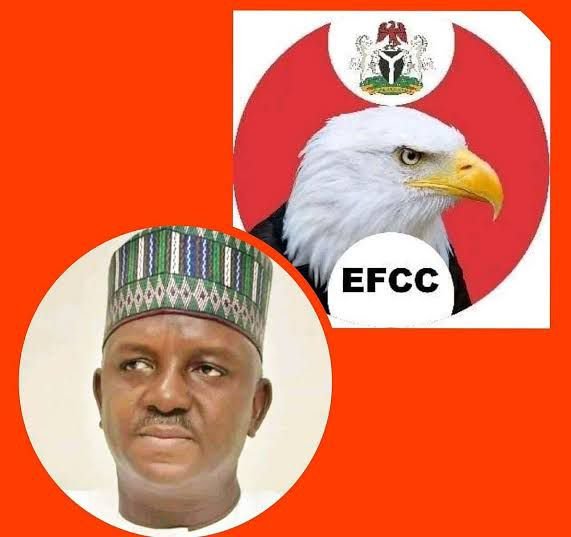
A former Minister of Power, Saleh Mamman, has been convicted by the Federal High Court in Abuja over a multi-billion naira money laundering case linked to major hydroelectric power projects in Nigeria.
Delivering judgment on Thursday, Justice James Omotosho found the former minister guilty on all 12 counts filed against him by the Economic and Financial Crimes Commission EFCC involving the laundering of more than N33.8 billion.
The anti-graft agency accused Mamman of conspiring with ministry officials and private companies in 2019 to divert funds meant for the Mambilla and Zungeru Hydroelectric Power Plant projects.
According to the charges, the money was allegedly moved through several private companies in violation of the Money Laundering Prohibition Act.
One of the charges also alleged that the former minister conspired with an associate, Samson Bitrus, to make a cash payment of over 665,000 US dollars to Mohiba Investment Limited without passing through a financial institution, contrary to Nigerian financial regulations.
Drama unfolded in court as the former minister failed to appear for the judgment. Defence counsel, Mohammed Ahmed, told the court that repeated attempts to reach his client had failed, adding that an associate later informed the legal team that Mamman was “indisposed.”
However, prosecuting counsel, Rotimi Oyedepo, SAN, challenged the explanation, arguing that no medical report or evidence was presented before the court to justify the absence.
Justice Omotosho criticised the defence’s inconsistent explanations about the whereabouts of the former minister, stressing that the court could not rely on mere claims without proof.
After hearing arguments from both sides, the judge proceeded with the judgment and convicted Mamman on all counts.
The court, however, postponed sentencing until May 13, 2026, because the former minister was not physically present in court.
To prevent any possible attempt to flee the country before sentencing, the prosecution requested a bench warrant for his arrest a request the court granted immediately.
The case is seen as one of the most significant anti-corruption prosecutions involving funds allocated to Nigeria’s power sector in recent years.