
Written by
Ishioma Appiah-Yeboah
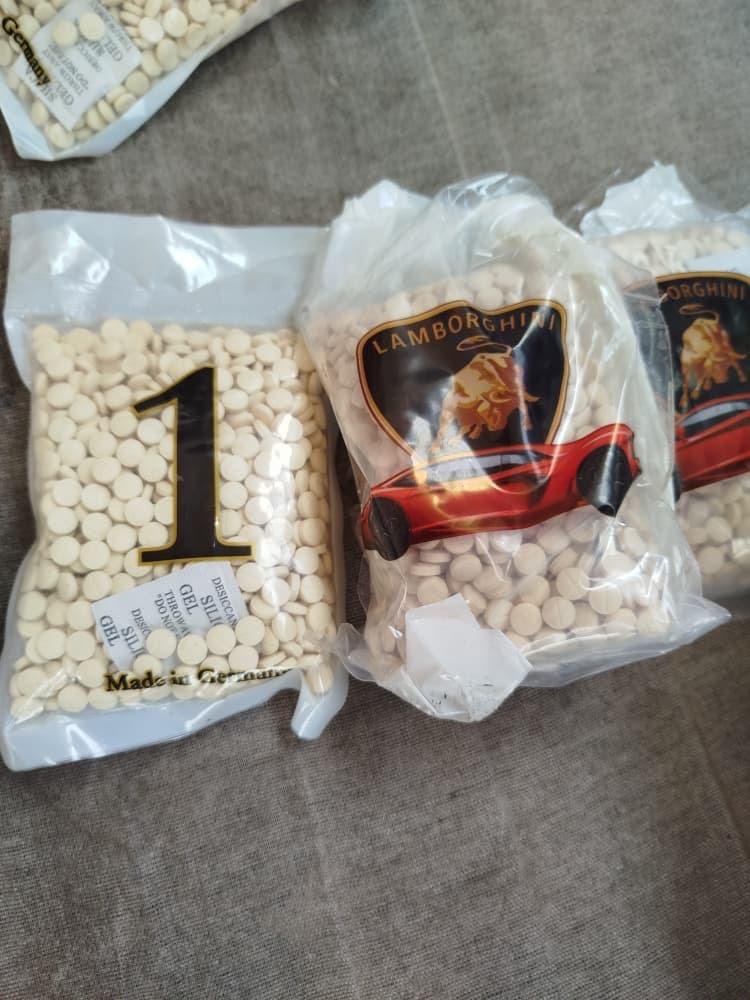
The fight against dangerous drugs in Nigeria has recorded another major breakthrough, as the National Drug Law Enforcement Agency, NDLEA, intercepts a fresh consignment of the notorious terror drug, Captagon, in Kwara State.
This latest seizure comes nearly five years after the agency made its first discovery of the substance in Africa at the Apapa seaport in Lagos, highlighting the growing concern about the drug’s spread beyond its traditional strongholds.
Captagon, a small but highly addictive amphetamine pill, is known for its powerful stimulant effects. It keeps users awake for long periods, induces extreme confidence, and often leads to reckless behaviour. Security experts warn that the drug has been widely used in conflict zones, with links to extremist groups such as Islamic State of Iraq and Syria, where it is reportedly traded to fund terrorism and sustain combat operations.
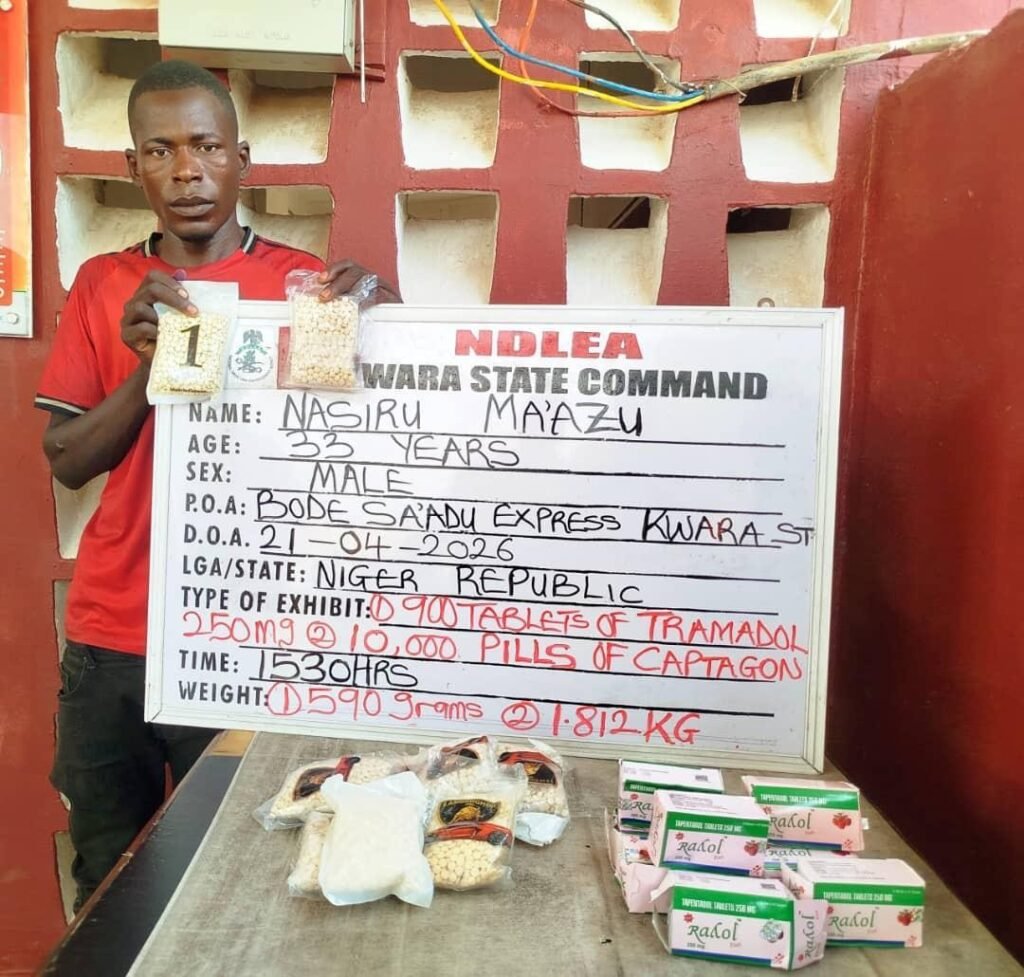
According to a statement by the Director,Media and Advocacy NDLEA Headquarters Abuja Femi Babafemi, the recent interception took place along the Bode Saadu road in Kwara State on April 21, 2026. Operatives on patrol stopped a passenger-laden trailer and, upon searching one of the occupants, 33-year-old Nasiru Mu’azu, discovered 10,000 pills of Captagon alongside packets of Tapentadol, a potent opioid.
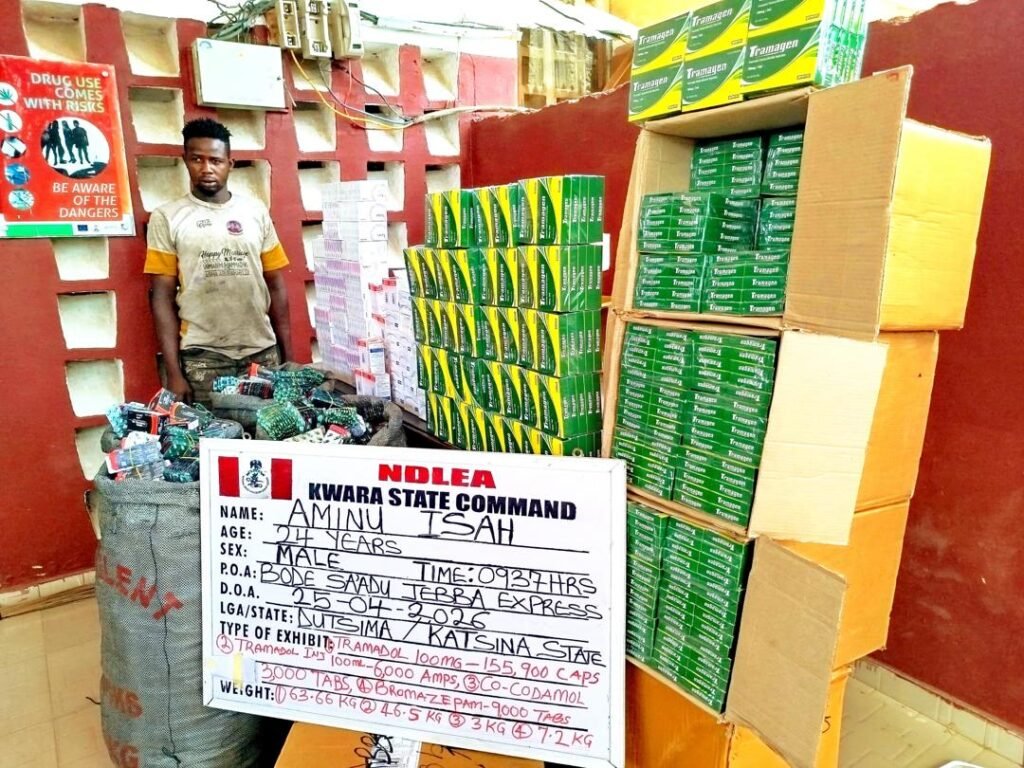
In a separate operation at the same location just days later, officers intercepted another trailer concealing a massive haul of illicit pharmaceuticals. Recovered items included over 155,000 capsules of tramadol, thousands of tramadol injections, as well as large quantities of Co-codamol and Bromazepam, all hidden in a specially constructed compartment beneath the vehicle. A 24-year-old suspect, Aminu Isah, has been arrested in connection with the seizure.
For the Nigerian public, this development underscores the increasing sophistication of drug trafficking networks and the real danger these substances pose to communities. Beyond addiction, drugs like Captagon can fuel violent behaviour, crime, and even insecurity, especially when linked to international criminal and terror networks.
However, the NDLEA says the interceptions demonstrate heightened surveillance and intelligence by the agency, but also serve as a reminder that public vigilance remains critical.