
Written by
Ishioma Appiah-Yeboah
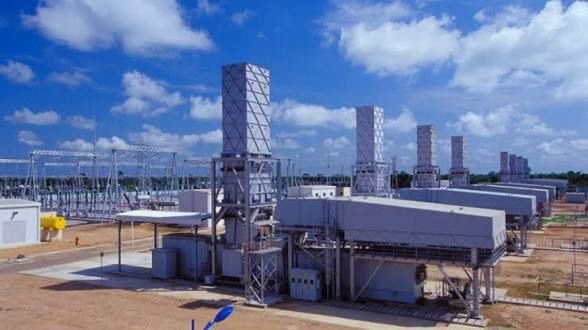
After nearly three years of inactivity, the 450-megawatt Alaoji Open Cycle Power Plant in Abia State has officially returned to operation, marking a major boost for Nigeria’s struggling power sector and raising hopes for improved electricity supply in the South-East.
The Niger Delta Power Holding Company (NDPHC) announced the revival of the plant during a meeting between its Managing Director and Chief Executive Officer, Engr. Jennifer Adighije, and Abia State Governor Alex Otti.
The Alaoji power facility was shut down in 2023 following disputes over gas supply, metering discrepancies, and mounting debts owed to gas supplier TotalEnergies.
The prolonged shutdown left one of Nigeria’s key generation plants idle at a time of worsening electricity shortages across the country.
Speaking during the meeting, Adighije said the restoration of the plant became a top priority after she assumed office in 2024.
According to her, NDPHC successfully repaired the defective gas infrastructure and settled all outstanding obligations owed to TotalEnergies, leading to the restoration of gas supply to the plant.
“The good news is that we have carried out and fixed all the remedial works on the defective gas line. We’ve also been able to completely defray our past due obligations to Total, and Total has restored gas supply to the plant,” she said.
She disclosed that major electromechanical rehabilitation works had also been completed on the facility, resulting in the revival of three generating units GT1, GT22, and GT23 now capable of supplying about 375 megawatts to the national grid.
Adighije noted that the Alaoji plant remains strategically important because of its strong transmission infrastructure and minimal power evacuation challenges.
Beyond restoring generation capacity, she said NDPHC is exploring partnerships with state governments under the Electricity Act and Nigeria’s evolving bilateral electricity market to improve electricity access nationwide.
She particularly praised the Abia State Government for reforms in the power sector, including the Aba ring-fenced electricity arrangement and the creation of the state electricity regulatory agency.
“We would love to form a strategic alliance with Abia State considering the fact that you are very driven and determined to secure uninterrupted electricity for the good people of Abia State,” she said.
Governor of Abia State Alex Otti on his part, welcomed the development, describing the revival of the power plant as critical to economic growth, industrialisation, and job creation in the state.
“The last time I visited the Alaoji plant, it was regrettable that such capacity was wasting away. I’m glad to learn that you have brought it back to life,” Otti stated.
The governor revealed that plans are underway to expand the plant’s capacity from 450 megawatts to 800 megawatts, with a long-term target of about 1,100 megawatts, depending on funding availability.
He also reiterated his administration’s commitment to strengthening electricity infrastructure across the state, noting that Abia had already ring-fenced the Umuahia electricity market and entered into an agreement with the Enugu Electricity Distribution Company (EEDC) to acquire distribution assets serving Umuahia and nearby communities.
According to Otti, the state would require about 100 megawatts to power the eight local government areas under the Umuahia ring-fence, while investments in renewable energy and mini-grid projects are also ongoing.
The governor directed the state Commissioner for Power to begin discussions with NDPHC on modalities for transmitting electricity from the Alaoji plant to Umuahia and other parts of the state.
Speaking after touring the facility, the Acting Chief Operating Officer of the Alaoji Power Plant, Engr. Emenogu Augustine Uzoma, assured stakeholders that the plant was fully ready for operations.
The restoration of the Alaoji plant is expected to strengthen electricity generation in the country at a time when Nigeria continues to grapple with unstable power supply and increasing energy demand.