
Written by
Ishioma Appiah-Yeboah
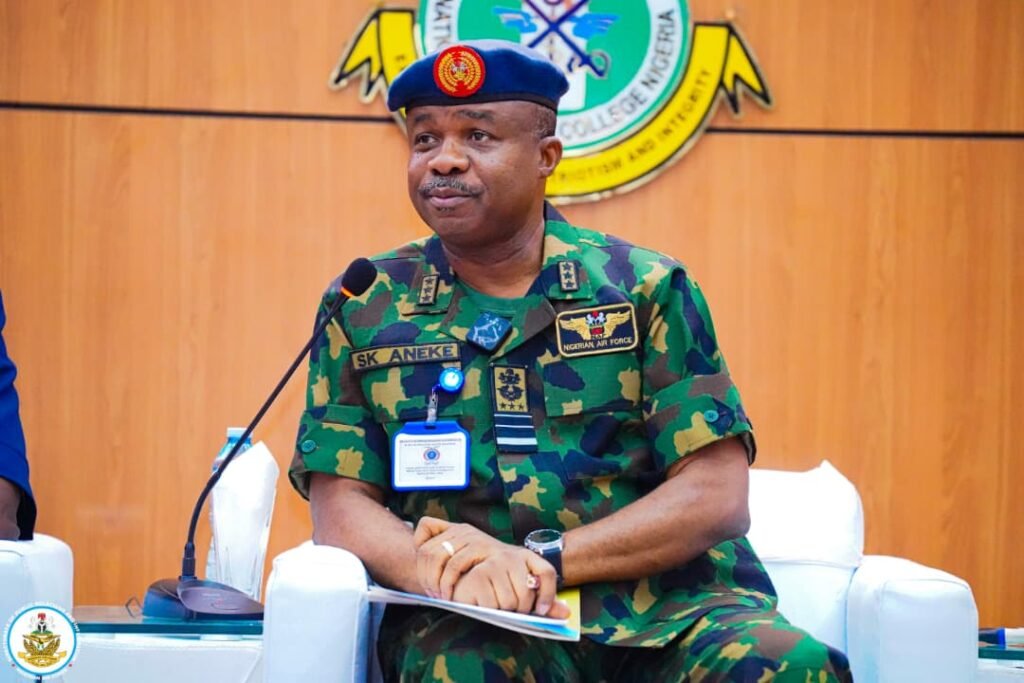
The Chief of the Air Staff (CAS), Air Marshal SK Aneke, has said no single military or security service can effectively tackle Nigeria’s growing security challenges, stressing that intelligence-driven operations, joint force integration and the effective use of air power remain critical to defeating evolving threats across the country.
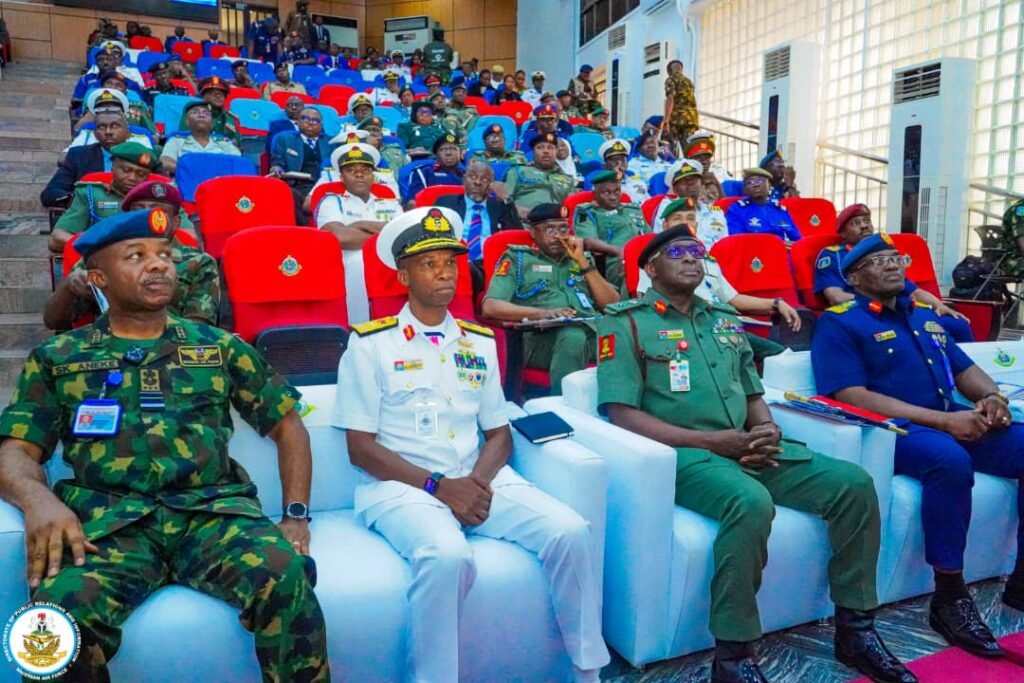
Speaking during a lecture titled “Air Power and National Security: The Nigerian Air Force in Perspective” at the National Defence College (NDC) in Abuja, Air Marshal Aneke said the country’s security landscape has become increasingly complex, requiring closer collaboration among the Armed Forces, intelligence agencies and other security institutions.
“No single Service can secure the nation alone,” the Air Chief declared, adding that “decisive air power delivers its greatest effect in synergy with surface forces.”He explained that modern security threats including terrorism, banditry, separatist violence, transnational organised crime and other activities by non-state actors have evolved beyond conventional warfare, with criminal groups increasingly exploiting emerging technologies, difficult terrain and civilian populations to evade security forces.
According to him, confronting such threats requires integrated inter-agency structures capable of combining intelligence from air, land, maritime, cyber and human sources into a unified operational picture that enables swift and decisive action.
The Air Chief described air power as a strategic asset that provides the speed, precision, flexibility and reach needed for intelligence gathering, surveillance and reconnaissance, rapid troop deployment, border security, maritime patrol and the protection of critical national infrastructure while minimising civilian casualties.
Air Marshal Aneke also identified cyberattacks, the growing use of unmanned aerial systems (drones), information warfare, piracy, arms trafficking and other transnational crimes as emerging threats reshaping Nigeria’s security environment.
He warned that hostile actors are increasingly exploiting cyberspace and social media to spread disinformation, deepen social divisions and erode public confidence in government institutions, making cyber resilience and strategic communication essential components of national security.
Reflecting on the Nigerian Air Force’s evolution over the past six decades, the CAS said the Service’s operational experiences have reinforced the need for indigenous innovation, logistics resilience, force modernisation and advanced intelligence capabilities.
He reaffirmed the Nigerian Air Force’s commitment to strengthening its operational effectiveness through homegrown technological solutions, emerging technologies, enhanced intelligence systems and strategic partnerships.
The Air Chief further noted that national security goes beyond protecting Nigeria’s territorial integrity, stressing that it also involves safeguarding democratic institutions, securing critical infrastructure, protecting economic prosperity and ensuring the safety of citizens.
He urged participants of the National Defence College Course 34 including senior military officers, police personnel, officials from Ministries, Departments and Agencies, and international participants from allied countries to continue promoting jointness, innovation and inter-agency cooperation as key pillars for addressing Nigeria’s evolving security challenges.
The lecture formed part of the National Defence College’s strategic leadership programme aimed at preparing senior military and civilian officials for national security and defence policymaking.