
Written by
Ishioma Appiah-Yeboah
For years, women in Great Sheda Community in Abuja’s Kwali Area Council have spent long hours peeling and grinding cassava by hand a labour-intensive routine that often left them exhausted before the day’s work was done. Now, that reality is changing.
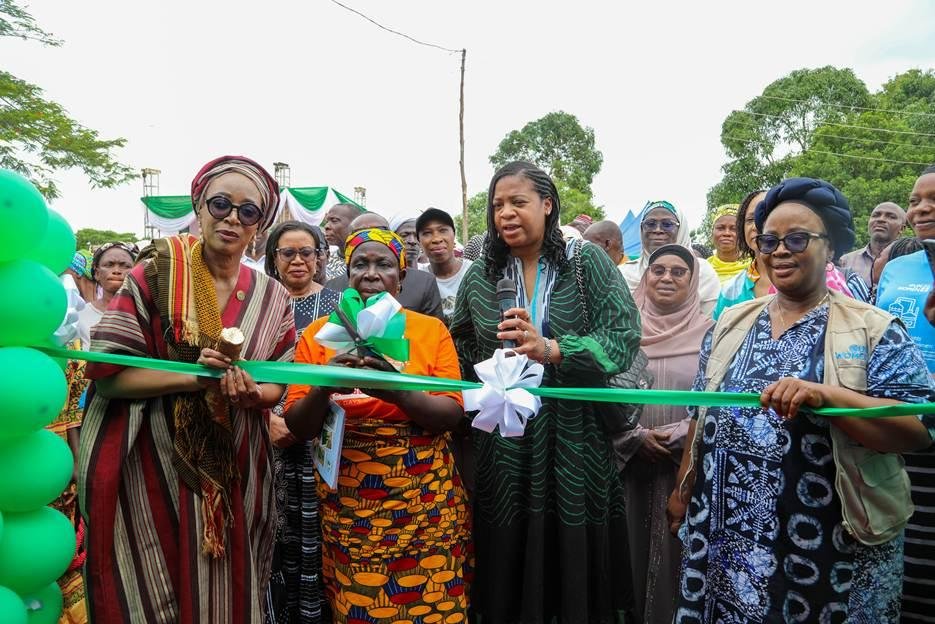
Hundreds of women in the rural community are set to benefit from improved livelihoods and increased economic opportunities following the inauguration of a modern Agro-Processing Centre established through a partnership between UN Women and the TY Danjuma Foundation.
At the heart of the facility is a cassava peeling and grinding machine designed to dramatically reduce the time, effort and physical strain involved in processing cassava into Akpu, a staple food widely consumed across Nigeria and a key source of income for many rural women.
For members of the Akpu Women Association and other women processors in the area, the new centre represents more than just modern equipment. It is a gateway to higher productivity, increased earnings and greater economic independence.
Previously, women spent several hours manually peeling and grinding cassava before it could be processed for sale or consumption. The introduction of mechanised processing is expected to improve efficiency, reduce post-harvest losses and free up valuable time for women to pursue other income-generating activities, care for their families and participate more actively in community development.
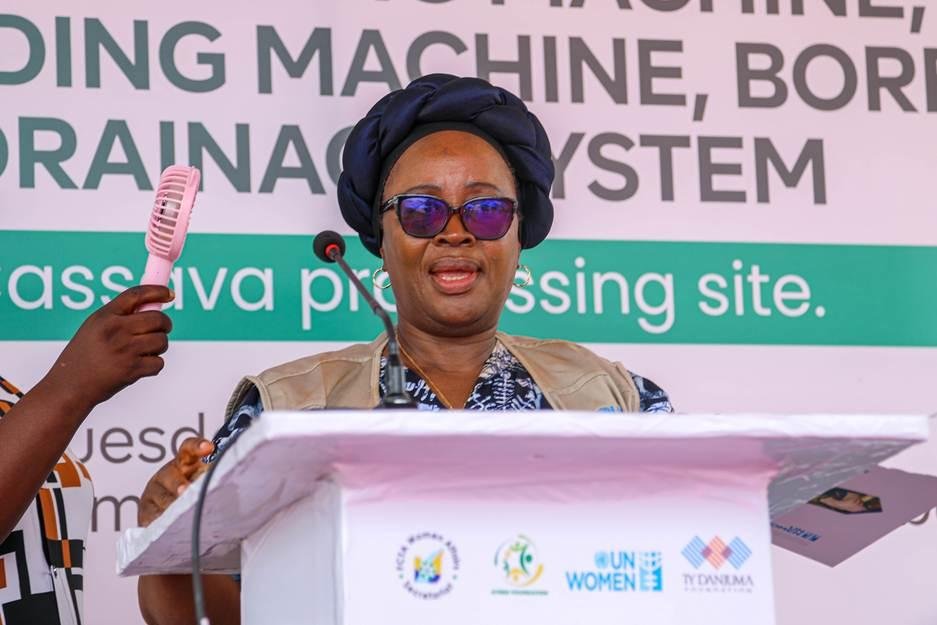
Speaking at the launch, UN Women Representative to Nigeria and ECOWAS, Beatrice Eyong, said the investment goes beyond providing machinery.
“Today, we are investing not only in a machine; we are investing in the time, productivity and economic potential of rural women. By reducing the burden of manual cassava processing, this Agro-Processing Centre will enable women to increase their earnings, pursue other productive opportunities and strengthen their contribution to the economic development of their families and communities,” she said.
The initiative forms part of broader efforts by UN Women and the TY Danjuma Foundation to promote women’s economic empowerment, strengthen rural livelihoods and create sustainable opportunities for women to thrive as entrepreneurs and contributors to local economies.
Chair of the TY Danjuma Foundation, Hannatu Gentles, reaffirmed the organisation’s commitment to supporting underserved communities through targeted investments in education, healthcare and economic development.
“We believe in putting economic power directly into the hands of women, the true backbone of our rural economy. We are confident in the capacity of the women of the Akpu Women Association to use this facility to grow their businesses and build better futures for their families,” she said.
Also speaking at the event, former FCT Mandate Secretary and Director-General of the Mariam Babangida Centre, Dr. Adedayo Benjamins-Laniyi, highlighted the wider significance of empowering rural women with modern tools and technology.
“When women who have laboured with their hands for decades are empowered with the right tools, they do not only process cassava — they strengthen food security, economic growth and community resilience,” she noted.
Residents described the intervention as a transformative development for Great Sheda and neighbouring communities. Beyond improving cassava processing, the facility is expected to stimulate local economic activities, create new business opportunities and boost household incomes.
The project also underscores the critical role women play in Nigeria’s agricultural value chain. Experts note that empowering rural women with access to technology, training and productive assets remains essential to achieving food security, reducing poverty and accelerating grassroots economic development.
As the machines begin operation, many women in Great Sheda see more than a processing centre. They see a chance to spend less time on backbreaking labour and more time building businesses, supporting their families and securing a better future.
For a community where cassava processing is both a livelihood and a way of life, the new Agro-Processing Centre stands as a symbol of progress, inclusion and the growing recognition that investing in women is an investment in community prosperity.